
How to Choose a Lunch Box for Your Brand
Compare lunch-box formats for your brand by meal fit, portability, materials and cleaning, with four ANTUER examples and a practical sample checklist.
- Published
- Updated
- Author
- ANTUER
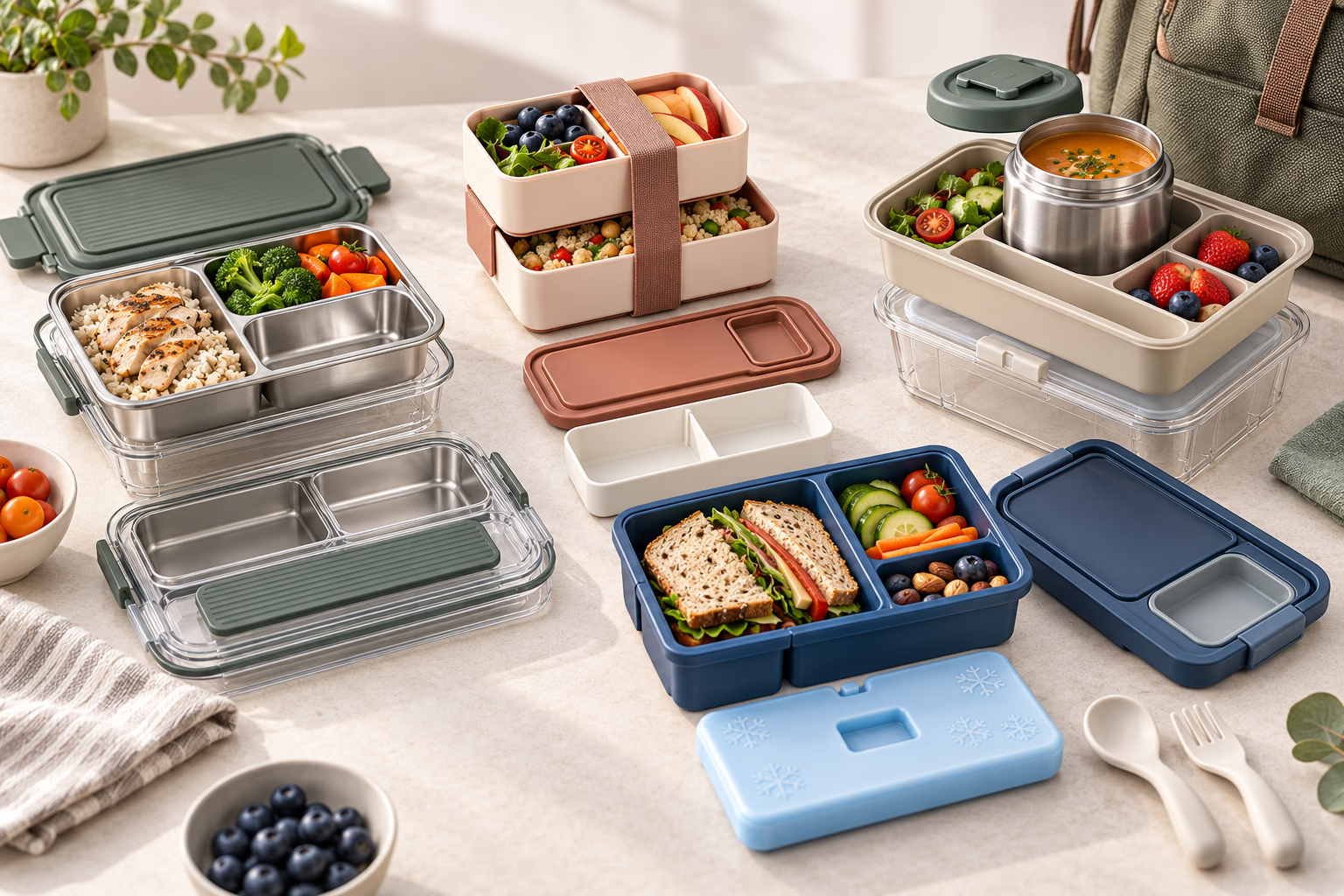
A large capacity is little help if the customer's usual sandwich will not fit. Extra compartments can organize snacks while leaving too little space for the main portion. A set that looks attractive in a photograph may take more effort to assemble and clean than its buyer expects.
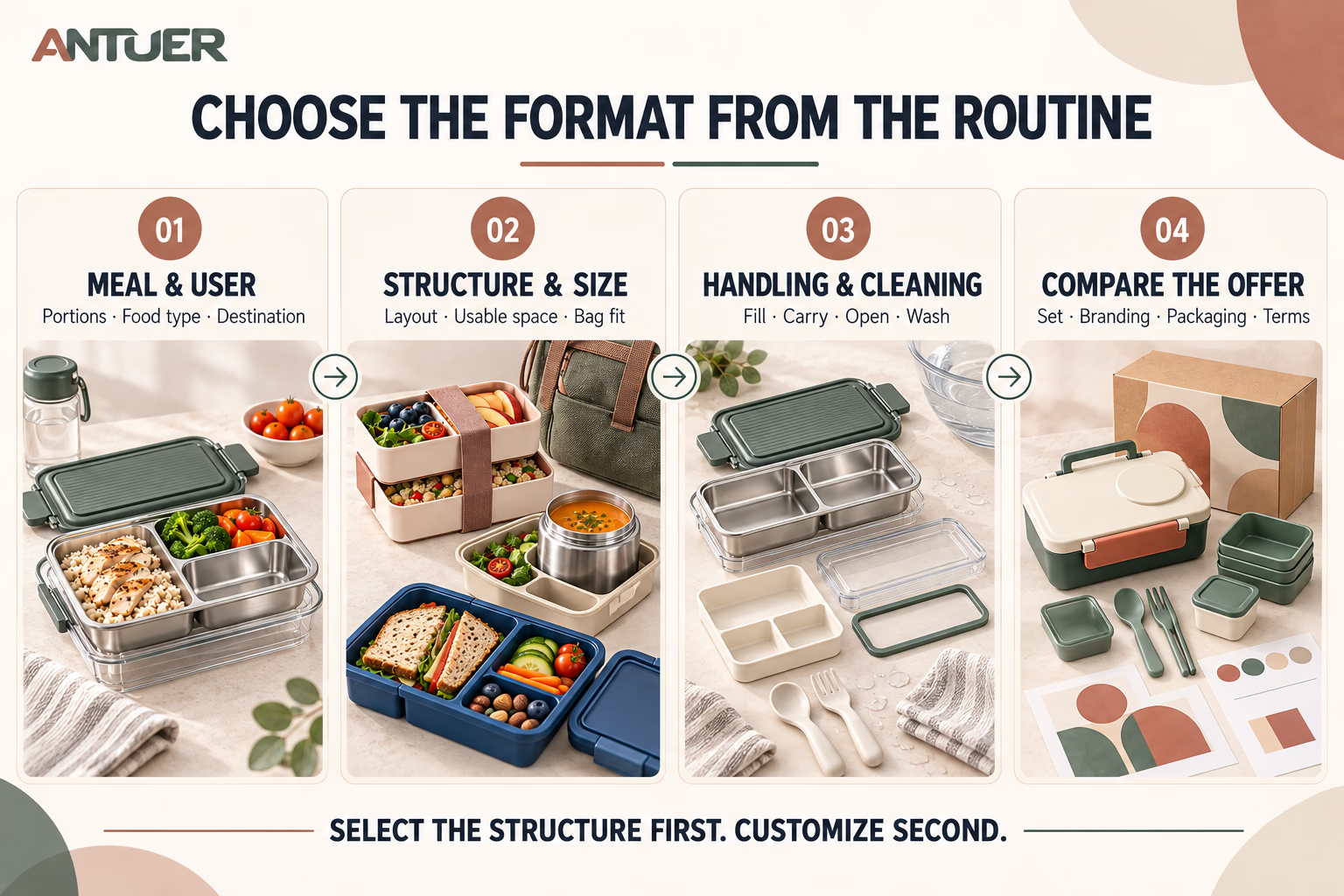
For brands, importers and retailers, choosing a lunch box starts with the meal and the daily routine. Use those requirements to narrow the range before investing in colors, artwork and packaging.
Write a meal brief before comparing models
Choose one initial audience: office commuters, school lunch users, meal-prep customers or another defined group. Describe a representative meal, the bag it travels in and how it will be eaten and cleaned.
Separate essential features from preferences. If the brief includes liquid sauces, specify whether they need a separate container. If customers reheat lunch, identify which component they would use. If portability matters, include the filled product and accessories in the carrying assessment.
For a children's range, include age-appropriate handling and a review of the destination market's requirements; an appealing print answers neither question.
Use four different structures to narrow the search
The Bento & Lunch Boxes range provides several starting points. These four models illustrate different purchasing decisions:
| If your brief prioritizes… | Model to examine | What to check before shortlisting |
|---|---|---|
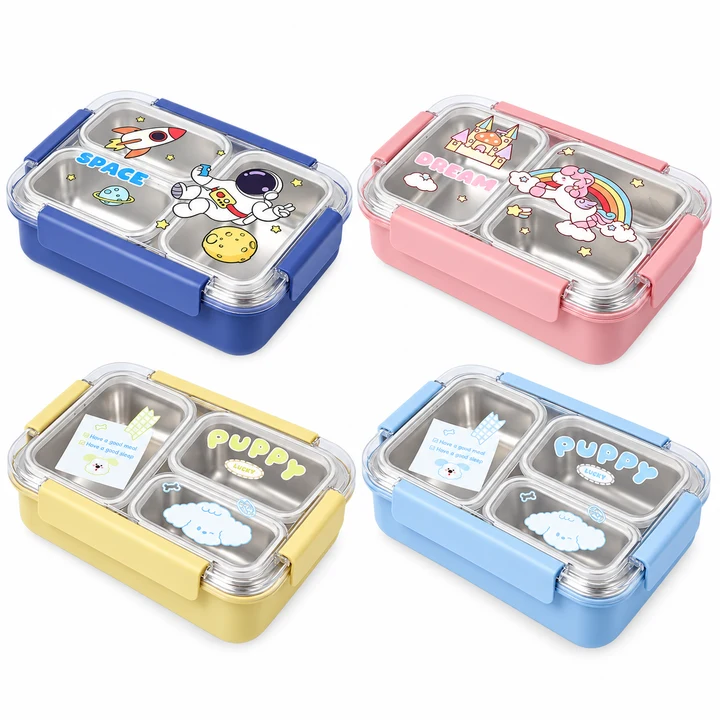
| A stainless-steel bento format and coordinated appearance | AT9322 — Contemporary Stainless-Steel Bento Box | Fit the intended meal into the layout; request a component material specification and confirm what the quoted set includes. |
| Separating a meal across levels | AT9260 — Two-Tier Stackable Lunch Box | Compare the single- and double-tier configurations against portion needs, assembled height and the intended bag. |
| An ice-pack component within the lunch-box format | AT9110 — Lunch Box with Ice-Pack Compartment | Fit the cooling component, assess the remaining usable space and work through preparation and reassembly. |
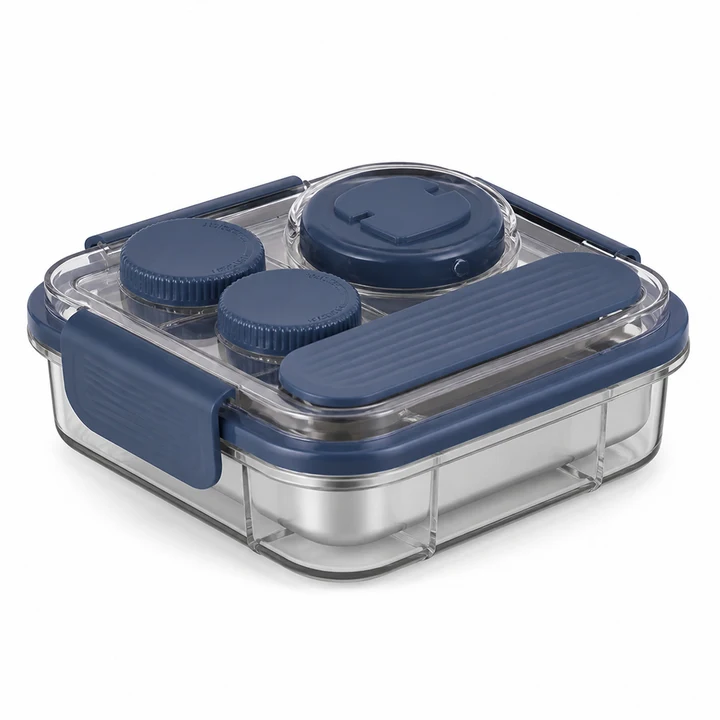
| A meal routine that needs a separate food jar | AT9106 — Bento Box with Insulated Food Jar | Check portions, carrying weight, access to the jar and the steps needed to clean the complete set. |
AT9260 makes the size trade-off concrete: the current specification lists 20 × 10 × 7.3 cm for one tier and 20 × 10 × 11.7 cm for two. The footprint stays the same while height changes. Try both against the intended bag and meal, rather than choosing by capacity alone.
An ice-pack compartment or insulated jar identifies a feature to evaluate. Any claim about how long food stays hot or cold needs evidence for the relevant product, preparation method and conditions.
Check usable space and separation together
Place a representative meal in each shortlisted sample. Check the dimensions of individual sections, the space below the lid and whether bulky food prevents proper closure. Record the same observations for every candidate.
Distinguish food organization from liquid containment. A divider may keep solid foods apart without stopping sauce from moving between sections. For a brand selling a box for salads and dressing, that difference affects the product choice and the instructions the customer receives.
If leak resistance is essential, agree the fill level, orientation, duration and handling conditions. Our leak-test guide explains how to turn that requirement into a test brief.
Assess materials as part of the intended use
Ask for a component list covering the tray, lid, outer body, seals and accessories. “Stainless steel” in a product name does not describe every part, and a resin name does not establish how the assembled box should be used.
For a range aimed at customers who reheat lunch, the practical questions are: which component goes into the microwave, what must be removed, and how will the instructions communicate this? For dishwasher use, identify which parts are covered by the claim and what evidence supports it.
FDA's food types and conditions-of-use tables distinguish refrigerated storage from reheating in the container. That is a useful illustration of why intended use matters in a material review. Obtain documentation appropriate to the finished product and destination market. [1]
Follow the customer's routine all the way to cleaning
Give each candidate the same practical trial, within its documented care instructions:
- Fill and close it: does the intended portion fit without forcing the lid?
- Carry it: does the assembled set fit the intended bag, and is the filled weight acceptable?
- Open and eat: can the intended user operate the closures and reach each component?
- Empty and clean: are corners accessible, and can removable parts be cleaned, dried and refitted as instructed?
Photograph specific concerns. “The seal is difficult to refit” gives the next discussion a clear subject; “the quality should be better” does not.
Compare the complete offer
For each candidate, request the same quantity basis, included accessories, branding scope, individual package, master-carton details and delivery terms. An apparently cheaper option may simply leave out a component or use different packaging.
Check minimum quantities per model and color, sample availability and project timing. The supplier-quotation guide helps make those comparisons consistent.
Select two or three candidates for the first sample review. Record why each remains: meal fit, handling, care requirements, material documentation and commercial fit. Once the structure works, use our private-label customization guide to define color, branding, packaging and approval references.
Get help with the difficult trade-off
Send ANTUER your target user, typical meal, destination market, sales channel and estimated quantity, together with any reference models. Tell us whether your biggest concern is portion space, portability, cleaning, retail positioning or cost.
ANTUER can help compare current formats and organize the questions needed for a useful sample review.
Sources
- Food Types & Conditions of Use for Food Contact SubstancesU.S. Food and Drug Administration
Related products
Formats to explore
Apply it to your project